OMG. This is both hilarious and terrifying.
Many out there know there are journals out there that border on SPAM. I have written about this often before (e.g., see For $&%# sake, Bentham Open Journals, leave me alone and Yet another SPAMMY Science publisher: Scientific and Academic Publishing and The Tree of Life: Really sick of Bentham Open Spam) as have many others (e.g., Open and Shut?: The Open Access Interviews: Matthew Honan and Academic spam and open access publishing - Per Ola Kristensson). UPDATE: forgot to include this link: Science SPAMMER of the month: OMICS publishing group
But this one takes the cake. There is a journal called "Molecular Biology" from the OMICS Publishing Group (for more on this publisher see Open and Shut?: The Open Access Interviews: OMICS Publishing ...). It seems new - as I cannot find any publications - but you never know - maybe they have been around a while and just have not gotten any submissions.
Monday, January 30, 2012


Boycotting Elsevier is not enough - time to make them invisible (UPDATED/RETRACTED)
.jpg)
Mathematicians boycott Elsevier publishingThe Cost of KnowledgeElsevier - my part in its downfallJournal Publishing ReformBan ElsevierScientists organize Elsevier boycottAcademic publishers have become the enemies of science
Sunday, January 29, 2012


First "Guardians of microbial diversity" award to Rob Dunn #microbiology #GMDs
Nice piece by Rob Dunn: Eating off the floor: How clean living is bad for you | Guest Blog, Scientific American Blog Network
For this I am awarding him the first of what will be many "Guardians of Microbial Diversity" awards here (we can just call these the GMDs). Not only will he get an award - I am going to send him a GMD gift from the various GMD doodads I am putting together.
Congratulations Rob. Now off to design some more diverse GMD doodads.
Dear #AAAS, I am NOT embargoing my own talk & I plan to record it and post afterwards #embargowatch
Just got another email from AAAS regarding their big meeting in February in Vancouver where I am scheduled to talk:
----------------------------------------
This request for materials is from the AAAS media relations team and is separate from any you may receive from your symposium organizer or the AAAS Annual Meeting office.
----------------------------------------
Dear AAAS Annual Meeting Participant:
Thanks to all of you who uploaded materials to the AAAS Virtual Newsroom by Jan. 16. For those of you who have not submitted materials or want to submit additional materials, you may do so right up through the meeting. The materials will be available online to reporters, although we can no longer guarantee that we'll be able to copy new
submissions at our expense for placement in the on-site library of speaker materials. We will try to include materials received in the next several days in our copy order, however.
One old, one new - a few phylogeny papers worth checking out
Just a quick one here. A few days ago in my lab we were discussing some challenges with doing phylogenetic diversity (PD) measurements in very very large phylogenetic trees. PD is a measure of total branch length in a phylogenetic tree for a group of taxa ... and we use it for many purposes.
For many of our applications we have been using an algorithm described by Mike Steele "Phylogenetic diversity and the Greedy Algorithm". But alas, is is not keeping up with the massive tree sets we are dealing with. Fortunately Aaron Darling in my lab found a alternative paper with a perfect sounding title for us: Phylogenetic Diversity within Seconds from Minh, Klaere, and von Haeseler. This seems like it will do the trick. I note - Kudos to Systematic Biology for making some older papers freely available. Not sure of their general policies on this but good to see.
Anyway - back to the grind ...
Saturday, January 28, 2012
A science birthday party for a five year old
Some pics from my son's fifth birthday party - chemistry & geology focused (we may sample microbes later ...). For the geology part we cracked open geodes. For the chemistry part, we played with citric acid, baking soda, some dyes, and other things ...


Experimenting with Blogger's "Dynamic Views" format and a way to use with without changing my front page
A while ago Blogger announced "Dynamic Views" for Blogger blogs (Dynamic Views: seven new ways to share your blog with the world). Some of these seem pretty near but I kind of like the non dynamic format for my blog and I am reluctant to jump into the new dynamic world.
Then I discovered a trick. Dynamic views are there and you do not have to switch over the front page for people to still play with with views.
To get to the dynamic views for this blog go to one of these links:
- http://phylogenomics.blogspot.com/view/classic
- http://phylogenomics.blogspot.com/view/magazine
- http://phylogenomics.blogspot.com/view/flipcard
- http://phylogenomics.blogspot.com/view/mosaic
- http://phylogenomics.blogspot.com/view/sidebar
- http://phylogenomics.blogspot.com/view/snapshot
- http://phylogenomics.blogspot.com/view/timeslide
Seems like this may work for most blogger blogs too. Not sure whether this is on purpose by Blogger and/or whether they have written about it or not but I like that it is there to play with. If people have any opinions about the Dynamic Views let me know. I note - one you go to the dynamic views you can switch between the different views using the drop down menu on the left.
Friday, January 27, 2012
Notes on #UCDavis Citizen Microbiology Meeting #UCDCitSci
We had a meeting at UC Davis on "Citizen Microbiology" from 1/23-1/24. It was a small meeting funded via my microBEnet project which itself is supported by a grant from the Alfred P. Sloan Fundation. The meeting was held at UC Davis - participants stayed at the new Hyatt on campus. We met in the new Conference Center. Participants at the meeting were me, David Coil (post doc in my lab), Paula Olsiewski (from the Sloan Foundation), Holly Bik (post doc in my lab), Darlene Cavalier (founder of ScienceForCitizens.Net), Dan Smith from Argonne National Lab, Denneal Jamison from UC Davis, Holly Menninger from NC State, Noah Feirer from CU Boulder, Josh Neufeld from Waterloo, Jason Bobe from The Personal Genome Project, Tom Bruns form UC Berkeley, Madhu Katti from Fresno State, Chris House from Penn. State, and Patrik D'haeseleer (from Lawrence Livermore National Lab).
Below is a "Storification" I made of the tweets and links from the meeting.
Below is a "Storification" I made of the tweets and links from the meeting.
A conference where the speakers are all women?
So - I was working on organizing a conference - a part of a series - and I was frustrated that prior conferences in the series had only or mostly male speakers. So I suggested for the new conference in the series we have only female speakers. Still working on pulling that off but probably won't quite happen. So then I posted to twitter and Google+ the idea - and asked a question about it.
UPDATE 10/1/2018. Replaced Storify with Wakelet
------------------
Thursday, January 26, 2012
Crossposting from microBEnet: architecture and microbes
Crossposting this from microBEnet: “Architectural design influences the diversity and structure of the built environment microbiome” – paper by the BioBE Center group | Microbiology of the Built Environment Network (post by David Coil).
We’ve posted in the past (here, here, here, and here) about some of the interesting work taking place at the BioBE Center regarding microbial community structure in health-care facilities. Today a paper on this topic came out in the ISME Journal.
This paper is certainly worth a read for anyone interested in the microbiology of the built environment. In particular they show that microbial community structure depends largely on the type of ventilation present in a room. Furthermore, they show that the microbial community present in a mechanically vented room has lower diversity than rooms with open windows or the outside air… and that lower diversity is comprised largely of human-associated microbes.
Here’s the abstract:
Buildings are complex ecosystems that house trillions of microorganisms interacting with each other, with humans and with their environment. Understanding the ecological and evolutionary processes that determine the diversity and composition of the built environment microbiome—the community of microorganisms that live indoors—is important for understanding the relationship between building design, biodiversity and human health. In this study, we used high-throughput sequencing of the bacterial 16S rRNA gene to quantify relationships between building attributes and airborne bacterial communities at a health-care facility. We quantified airborne bacterial community structure and environmental conditions in patient rooms exposed to mechanical or window ventilation and in outdoor air. The phylogenetic diversity of airborne bacterial communities was lower indoors than outdoors, and mechanically ventilated rooms contained less diverse microbial communities than did window-ventilated rooms. Bacterial communities in indoor environments contained many taxa that are absent or rare outdoors, including taxa closely related to potential human pathogens. Building attributes, specifically the source of ventilation air, airflow rates, relative humidity and temperature, were correlated with the diversity and composition of indoor bacterial communities. The relative abundance of bacteria closely related to human pathogens was higher indoors than outdoors, and higher in rooms with lower airflow rates and lower relative humidity. The observed relationship between building design and airborne bacterial diversity suggests that we can manage indoor environments, altering through building design and operation the community of microbial species that potentially colonize the human microbiome during our time indoors.
Wednesday, January 25, 2012
Letter from Justice Cruz Reynoso to President Yudof regarding pepper spray investigation at #UCDavis
Just got this in email and thought it would be good to share


The text reads:
Support good science writing - pay for it
A quick one here since I think there is not much complication to this issue. As many know - I am a big big advocate of "open access" to the scientific literature. I think if the taxpayers / government pay for research (and pays for salaries/indirect costs/etc that go into publishing) then the results of that research (data, papers, software) should be available freely and openly. I think it is also better if ANY scientific writing could be freely and openly available (e.g., research paid by private funds).
However, this does not mean that one should not pay for writing about science. I think we as a society need to support good science writing and reporting. I subscribe to the New York Times -party partly for access to the science writing (not all of which I like but some of which is phenomenal). I subscribe to Wired. I donate (occasionally) to blogs. I subscribe to Scientific American. I buy good science books (sometimes many copies and then give them out - like I did with Rebecca Skloot's HeLa book which).
So I call on people out there - whether you support Open Access to government funded work or not - pay for some good science writing. Buy a book. Subscribe to a magazine. Donate to a blog. Do something to support those who enrich our lives. Science writers need to earn a living after all ...
However, this does not mean that one should not pay for writing about science. I think we as a society need to support good science writing and reporting. I subscribe to the New York Times -
So I call on people out there - whether you support Open Access to government funded work or not - pay for some good science writing. Buy a book. Subscribe to a magazine. Donate to a blog. Do something to support those who enrich our lives. Science writers need to earn a living after all ...
Real science vs. fake science in advertising
Just a quick one here - already tweeted about this but I know some people out there do not use the twitter. There is a great article in BlogHer from Emily Willingham on Science vs. "Fake" Science in Ads: How Do We Tell Real Science from Fake Science in Ads? | BlogHer
It goes through many ways to do a sniff test on scientific claims that seem off. I have blogged many times here about how fake science in ads and the media drives me crazy (e.g., see my overselling the micro biome awards)) and have thought about some of the items on Emily's list here but not all of them. And it is very helpful to see them all together. This is one article worth sending around.
Tuesday, January 24, 2012
UCDavis IT and GMail think this "Open Journal of Genetics" journal announcement is SPAM, I do too #EndScienceSpam
Just got this email which both Gmail and UC Davis systems think is SPAM (see below). It is from yet another new journal and the journal certainly seems a bit, well, off to me. I am posting such emails from journals like this in the hope that in Google search results people at least see some comments on the web at least asking questions about the quality of these journals. I do not know any details about this journal but I note I could not find any actual description of their licensing/copyright policies and all the papers list the copyright as belonging to the journal. This seems to me to be unlikely to fit the standard definition of "open access" though it is very hard to tell from their website.
Monday, January 23, 2012
Scientists have .... (impressions from #scio12)
 |
Made using Wordle.Net
When I was enduring a painfully extended journey home from Science Online 2012 I kept thinking about the essence of the meeting.
And for reasons I am not entirely clear on, the essence kept coming up as single words. So I tried to write them down but it was a bit too vague ... so then I thought - what about giving those words some friends ...
And for reasons I am not entirely clear on, the essence kept coming up as single words. So I tried to write them down but it was a bit too vague ... so then I thought - what about giving those words some friends ...
Sunday, January 22, 2012


The Books of Science Online 2012 #scio12 #bookporn #sciencerocks cc: @avflox
Well, I am a book geek. While others took pictures of all the tatoos, people, and more -- the #1 thing I took pictures of were the books on display ... (UPDATE - made a mini Amazon Store with all the books here).
UPDATE 2: August 2013. Posterous is dead so deleted the links to the book pictures from Posterous below. Changed it to Picasa.
UPDATE 2: August 2013. Posterous is dead so deleted the links to the book pictures from Posterous below. Changed it to Picasa.
Friday, January 20, 2012
Draft post cleanup #22: Fun emails for another Jonathan Eisen
Yet another post in my "draft blog post cleanup" series. Here is #22. Written 5-5-2007 ...
----------------------------------
I have decided to start posting some of the more fun real emails I have gotten relating to some of my scientific work or supposedly related to it.
The best I get are usually not related to my work but instead are related to another Jonathan Eisen out there. There is this other person with my name who has written some off-kilter books about conspiracy theories. And every once in a while I get an email means for him. For example, here is one (with some personal information about the sender removed)
----------------------------------
I have decided to start posting some of the more fun real emails I have gotten relating to some of my scientific work or supposedly related to it.
The best I get are usually not related to my work but instead are related to another Jonathan Eisen out there. There is this other person with my name who has written some off-kilter books about conspiracy theories. And every once in a while I get an email means for him. For example, here is one (with some personal information about the sender removed)
Thursday, January 19, 2012
Draft post cleanup #21: Tracking progress on the vertebrate tree of life
Yet another post in my "draft blog post cleanup" series. Here is #21; from March 2010:
A very interesting paper came out recently from colleagues of mine at UC Davis: Rapid progress on the vertebrate tree of life. I did not know they were working on this but perhaps should have. It has some fun/interesting analysis of the accumulation of phylogenetic knowledge over time. For example see Figure 1
A very interesting paper came out recently from colleagues of mine at UC Davis: Rapid progress on the vertebrate tree of life. I did not know they were working on this but perhaps should have. It has some fun/interesting analysis of the accumulation of phylogenetic knowledge over time. For example see Figure 1
 |
| Cumulative phylogenetic information amassed for the last 16 years. The accumulation of sequences for vertebrates in GenBank (a), papers using the term 'phylogeny' or 'phylogenetics' in the Web of Science database (b) and phylogenetic resolution (measured as the proportion of nodes with at least 50% bootstrap support) in the vertebrate tree of life resulting from these research efforts (c). In all cases, the data are cumulative from the start of each analysis. Phylogenetic resolution is calculated as in Table 1. Trend lines are exponential in (a), and second order polynomial in (b) and (c). |


Is stupidity important in scientific research?
Just got sent this article which came out in 2008 but I do not remember seeing previously: The importance of stupidity in scientific research. The title seems a bit trite and in some ways the article is. But it has a resonance with many people and I thought I would at least post the link here. Some comments about it I found on the web include:
- The Importance of Stupidity - Improbable Research » Blog Archive
- On the importance of stupidity in scientific re... - For the Graduate ...
- "The importance of stupidity in scientific research" from J Cell ...
- The Importance of Stupidity in Grad School CaPS
- The Dynamic Earth: The Importance of Stupidity in Research
- The importance of feeling stupid
I can see why it resonates with people even though I am not sure I personally agree with the sentiments. It is definitely worth a read.
Hat top to Melanie Melendrez for pointing it out.
Draft post cleanup #20: Retaking the biology GRE
Yet another post in my "draft blog post cleanup" series. Here is #20:
In 2008, I had this idea that it would be interesting for biology faculty to retake the Biology GRE and see how they do. I never got around to trying to register to take it and thus never wrote about it ... Any Profs. out there who have gone back and taking the GREs?
In 2008, I had this idea that it would be interesting for biology faculty to retake the Biology GRE and see how they do. I never got around to trying to register to take it and thus never wrote about it ... Any Profs. out there who have gone back and taking the GREs?
YASSP (Yet another SPAMMY science publisher)
Just got an email from YAP (yet another publisher) recruiting articles for new journals. These ones seem just about as SPAMMY as some of the other recent ones to come out. Uggh. Double uggh. Email is posted below:
Tuesday, January 17, 2012
UC going smoke free sometime soon apparently
Just got this email:
UC Davis community members,
I am writing to share with you the attached letter
from President Mark G. Yudofto chancellors regarding the University's recent decision to make all campuses tobacco-free by 2014. The new policy direction will prohibit the smoking and chewing of tobacco, as well as the sale of tobacco products, and aligns with practices already in place at UC medical centers and many other universities.
As the President's letter indicates, each campus will soon be developing plans for implementing this decision, and we will have more information about what this new policy process will entail for our community as the UC Davis plan takes shape. We will, of course, consult with a broad range of our campus community as we develop mechanisms to implement this new policy direction.
Sincerely,
John Meyer
Vice Chancellor, Administrative and Resource Management

Draft post cleanup #19: Spam and biased spam at that
Yet another post in my "draft blog post cleanup" series. Here is #19 from September 2011:
I am sure many others out there who blog have gotten this kind of message:
I am sure many others out there who blog have gotten this kind of message:
We at Onlinephdprograms.com recently came across your blog and were excited to share with you an article “15 Fictional Professors We Wish Were Real” was recently published on our blog and we hoped that you would be interested in featuring or mentioning it in one of your posts.I assume that these posts that are written for this, and various other sites, are all about driving up Google Search ranking somehow. So I normally avoid writing about them. But I thought I would in this case because, well, their post annoyed me because of the 15 functional professors they wrote about, only one is female. Really, that is the best they could do? In three minutes of web surfing (e.g., browsing this site and this one) I have come up with a list of fictional female professors who certainly could have been included in their list. And many are much more interesting than some they wrote about. Here are some examples:
(http://www.onlinephdprograms.com/15-fictional-professors-we-wish-were-real/)
Either way, I hope you continue putting out great content through your blog. It has been a sincere pleasure to read.
Thanks for your time,
Liz Nutt
- Eleanor Arroway - Jodie Foster's character in Contact
- Susan Calvin - character in Isaac Asimov's I Robot series
....
But then I stopped because I was disappointed I could not find more functional female professors to add to my list. I do think the list posted by the OnlinePhD site could certainly have had more women on it ... but I never posted the post because I had a hard time coming up with a lot of examples ... but now that I am trying to revive draft posts ... well ... I will put this out there even if it is an incomplete thought
Monday, January 16, 2012
Draft post cleanup #18: Epernicus
Yet another post in my "draft blog post cleanup" series. Here is #18, from July 2008.
Well, was going to write about Epernicus in 2008 as an interesting tool for networking scientists. I still have an account there which I just updated a bit. But I am not sure if Epernicus is being used much anymore. I have focused a lot on a similar system: Mendeley though they have differences.
Well, was going to write about Epernicus in 2008 as an interesting tool for networking scientists. I still have an account there which I just updated a bit. But I am not sure if Epernicus is being used much anymore. I have focused a lot on a similar system: Mendeley though they have differences.
Sunday, January 15, 2012
Draft post cleanup #17: Obama overqualified for application to be president
Yet another post in my "draft blog post cleanup" series. Here is #17 from October 30, 2008. I note - I never posted it because I tend to avoid politics here on the blog --- but three+ years later I think it is OK ...
Dear Mr. Obama
Dear Mr. Obama
Thank you for your application for the position of
President of the United States
Unfortunately we are unable to consider you for this position because you have been deemed overqualified.
Saturday, January 14, 2012
Draft post cleanup #16: Science and Title IX
Yet another post in my "draft blog post cleanup" series. Here is #16 from July 2008.
I had seen an article that surprised me: Findings - John Tierney - Science Has Become the New Frontier for Title Nine - NYTimes.com
In the article Tierney discussed how the Title IX statute which forbids discrimination based on gender in education and has been applied extensively to athletic endeavors was beginning to be applied to science. Not sure what has become of this over the last 3+ years --- if anyone knows more please post ...
I had seen an article that surprised me: Findings - John Tierney - Science Has Become the New Frontier for Title Nine - NYTimes.com
In the article Tierney discussed how the Title IX statute which forbids discrimination based on gender in education and has been applied extensively to athletic endeavors was beginning to be applied to science. Not sure what has become of this over the last 3+ years --- if anyone knows more please post ...
Yet another SPAMMY Science publisher: Scientific and Academic Publishing
Uggh - just got this email. Seems there is yet another SPAMMY Science Publisher trying to get established. Here's is a suggestion for all. Avoid these kinds of publishers. They probably do more harm than good ... Plus if you can label their emails as SPAM to help out others. And I think posting comments like this will help since when people do google searches they may see the critiques as well as the journal sites.
Dear Jonathan A Eisen,
This is Scientific & Academic Publishing, USA. Nice to get your information from the journal PLOS Biology and also happy to pass on our regards to you from the editorial department of SAP.
Friday, January 13, 2012
Draft post cleanup #15: Now this is how to write a scientific paper
Yet another post in my "draft blog post cleanup" series. Here is #15, from May 2010.
I had written:
I had written:
Just found an old fax I received from my brother of a paper published in 1974 in Scientia Sinica. "Studies of the insulin crystal structure: the molecule at 1.8Å resolution." Sounds pretty straightforward right? But then you read the paper: Here is the abstract (could not find a PDF so scanned in the fax I got).
Request for input - are there any rules regarding posting text of one's own NSF (or other) grant proposals?
In response to a series of posts from Karen James (who is a biologist now in Maine and is director of the HMS Beagle Project) on Twitter, I am posting here to ask for input from the crowd. On Twitter, Karen has been discussing her putting together an NSF proposal and was then celebrating a few days ago when it was done.
I have posted some of the twitter conversation below. But to get directly to the point the question I have for everyone here is - are there any rules at the National Science Foundation that would prevent one from sharing with others a grant proposal that one has submitted? Are there any rules against this at any agency? I think there are none but apparently some are telling Karen otherwise.
Any information on this would be useful. Some of the twitter conversation is below:
I have posted some of the twitter conversation below. But to get directly to the point the question I have for everyone here is - are there any rules at the National Science Foundation that would prevent one from sharing with others a grant proposal that one has submitted? Are there any rules against this at any agency? I think there are none but apparently some are telling Karen otherwise.
Any information on this would be useful. Some of the twitter conversation is below:
Thursday, January 12, 2012
Storification of Tweets from talk by Jane Lubchenco at #UCDavis
Jane Lubchenco, head of NOAA, gave a talk at UC Dav is yesterday and I made a "Storify" version of some tweets from it. I am putting it below the "fold" here since it takes up a lot of space and I cannot figure out how to put the "click here for more" feature in the middle of a storify embed.
Letter from Chancellor Katehi to #UCDavis Community
Posting this email I received for those interested. Not sure what will happen this quarter in terms of Occupy UC Davis actions and related issues ... but will post as things develop.
Dear UC Davis Community,
Happy New Year! I am writing to welcome everyone back to campus and to share my thoughts about the coming year at UC Davis.
Google scholar missing paper issue clarified, though not corrected, but glad Google responded
Below is a thread relating to a reference missing from Google Scholar
From: jonathan.eisen@gmail.com
Subject: Missing reference in Google Scholar
Date: Sat, 24 Dec 2011 15:12:07 +0000
The following important and highly cited reference is somehow missing from Google Scholar although it was there a few months ago - it would be useful to have it back:
The following important and highly cited reference is somehow missing from Google Scholar although it was there a few months ago - it would be useful to have it back:
Sequence and analysis of chromosome 2 of the plant Arabidopsis thaliana
Draft post cleanup #14: Video of Talk of mine from 2005
Yet another post in my "draft blog post cleanup" series. Here is #14 from July 2010.
Embedded here is a video of a talk I gave in 2005 at the NIH entitled "More Questions Than Answers Insights into DNA Repair Processes from Genome Sequencing Projects"
Embedded here is a video of a talk I gave in 2005 at the NIH entitled "More Questions Than Answers Insights into DNA Repair Processes from Genome Sequencing Projects"
Wednesday, January 11, 2012
OK - testing "threaded commenting" on my blog
Just saw this post from Blogger and am testing it here - seems like it could be a better commenting system --- Engage with your readers through threaded commenting | Blogger Buzz
Let me know if there are any opinions on the matter ...
Diplomacy fails? Military options off the table? Let's assassinate the scientists
While I for one do not want Iran to have nuclear weapons I think this is disturbing: Iranian nuclear scientist killed in Tehran explosion - latimes.com
So - basically - the decision by some agency or agencies (US, Israeli, others) seems to be - let's go after the scientists. Why do they do this? Well, because nobody seems to have the skills or desire to develop an international consensus or diplomacy for an alternative response. Not that dealing with Iran would be easy. And not that military options would be good. But sad in many ways that the option of choice is to kill the scientists behind the work. If all other options had been tried - this might be reasonable - but it does not seem to me that all other options have been tried yet ...
Wrap up of tweets from Joe Derisi talk
Just a quick post here - for those not following on Twitter - Joe Derisi gave a talk at UC Davis 1/9 and I posted some tweets about it. Here they are:
 | phylogenomics Joe DeRisi getting ready for his talk at the #ucdavis Genome Center this am http://t.co/OwZbM2nn 1/9/12 9:57 AM |
| phylogenomics Joe Derisi's first slide : "Bees, viruses, and plastids: a seminar in two parts" - I think he needs to work on his math http://t.co/0nPjChlc 1/9/12 10:05 AM |
Another seminar at #UCDavis 1/11 - Evan Eichler - #TooManyChoices
Well, this is going to be awkward. I really really want to hear this upcoming talk by Evan Eichler. But alas, Jane Lubchenco - head of NOAA - is talking at the same time. And sorry Evan, but Jane wins - this time (never heard her speak before).
UC Davis M.I.N.D. Institute's 2011-2012 Distinguished Lecturer Series
SPEAKER: Evan E. Eichler, Ph.D.
TOPIC: Copy Number Variation, Exome Sequencing and Autism
DATE: Wednesday, January 11, 2012
TIME: 4:30 pm - 6:00 pm
LOCATION: M.I.N.D. Institute Auditorium (2825 50th Street, Sacramento)
UC Davis M.I.N.D. Institute's 2011-2012 Distinguished Lecturer Series
SPEAKER: Evan E. Eichler, Ph.D.
TOPIC: Copy Number Variation, Exome Sequencing and Autism
DATE: Wednesday, January 11, 2012
TIME: 4:30 pm - 6:00 pm
LOCATION: M.I.N.D. Institute Auditorium (2825 50th Street, Sacramento)
Two seminars from Jane Lubchenco at #UCDavis - fun, fun and fun
Another cool seminar speaker at UC Davis. This time we get to hear from Jane Lubchenco - Director of NOAA brought to Davis as part of the Storer Seminar Series. She will be giving two seminars
January 11
ARC Ballroom A 4:10 PM - "Public Lecture"
Sustaining the Beauty and the Bounty of Oceans: Grand Challenges for Science and Society
January 12
2 Wellman, 4:10 PM
Cutting-edge but relevant science: Whose responsibility is it?
Draft post cleanup #13: Twisted tree of life award: MSNBC, Aliens and Photosynthesis
Yet another post in my "draft blog post cleanup" series. Here is #13 from July 2010.
I wanted to give this article a "Twisted Tree of Life Award":
How to find aliens: Follow the photosynthesis - Technology & science - Space - Space.com - msnbc.com
It is pretty painful to me. Basically the people they are quoting argue that since "complex" life on Earth requires oxygen and since oxygen only comes from photosynthesis, therefore we should look for planets where photosynthesis is possible as the place where life is most likely to be interesting. Uggh. So many things in the article I did not like ... but just not enough time I guess to bitch about it then. I will leave it to readers to decide for themselves I guess ...
I wanted to give this article a "Twisted Tree of Life Award":
How to find aliens: Follow the photosynthesis - Technology & science - Space - Space.com - msnbc.com
It is pretty painful to me. Basically the people they are quoting argue that since "complex" life on Earth requires oxygen and since oxygen only comes from photosynthesis, therefore we should look for planets where photosynthesis is possible as the place where life is most likely to be interesting. Uggh. So many things in the article I did not like ... but just not enough time I guess to bitch about it then. I will leave it to readers to decide for themselves I guess ...
Tuesday, January 10, 2012
To be discussed in journal club here today: eukaryotic metatranscriptomics
Going to be discussing this in a journal club today
Will post some comments / notes later / as I have them but any comments from others welcome too ...
PLoS ONE: Metatranscriptomics Reveals the Diversity of Genes Expressed by Eukaryotes in Forest Soils
Note - am copying the whole text here to mark it up a bit since it it awkward to try and mark it up at the PLoS One site
Note - am copying the whole text here to mark it up a bit since it it awkward to try and mark it up at the PLoS One site
Draft post cleanup #12: RecA is cool (and interesting)
Yet another post in my "draft blog post cleanup" series. Here is #12:
I have been interested in RecA and related proteins for many many years. In particular I have been interested in structural and functional evolution of RecA and its relatives. This all started when for my second scientific paper I helped a post doc in the lab where I was doing my PhD do some structure-function-evolution studies (with a little help from Chris Lee, then in Mike Levitt's lab, and my brother, then in Don Wiley's lab).
I have been interested in RecA and related proteins for many many years. In particular I have been interested in structural and functional evolution of RecA and its relatives. This all started when for my second scientific paper I helped a post doc in the lab where I was doing my PhD do some structure-function-evolution studies (with a little help from Chris Lee, then in Mike Levitt's lab, and my brother, then in Don Wiley's lab).
AAAS meeting - is this one for embargo watch?
Giving a talk at the AAAS meeting in February in Vancouver. I have avoided AAAS meetings previously because I do not like AAAS's position on open access issues. Given that AAAS is at least indirectly a supporter of the recent Research Works Act I am pondering whether or not I will boycott the meeting. While I ponder that -- I thought I would share the presenter instructions I just got from AAAS (see below).
Apparently, my talk is "embargoed" - though I am not sure I understand how that works for a talk (see the part I highlighted in yellow which, well, I almost certainly will not be following). I do not understand actually what a talk embargo means - am I supposed to not share with people what I am working on so that every piece of data I present at the meeting will never have ben seen by anyone? Or am I just not supposed to show my talk to anyone? What exactly is a talk embargo? And what will they do when I do not follow it? Maybe Ivan Oransky knows.
Apparently, my talk is "embargoed" - though I am not sure I understand how that works for a talk (see the part I highlighted in yellow which, well, I almost certainly will not be following). I do not understand actually what a talk embargo means - am I supposed to not share with people what I am working on so that every piece of data I present at the meeting will never have ben seen by anyone? Or am I just not supposed to show my talk to anyone? What exactly is a talk embargo? And what will they do when I do not follow it? Maybe Ivan Oransky knows.
How to stop press release spam? Post embargoed PRs. Here's one about Mayans using tobacco.
Just got this press release by email. I am sick of receiving dozens of unsolicited press releases, especially those in topics not related to my work. So from now on I think I will be posting the press releases whether there is an embargo or not, since I did not agree to any embargo in these cases (see Ivan Oransky's post at Embargo Watch about this). Here is one I just got about Mayans using tobacco. Wonder how many stories will make jokes about whether this is what led to their demise?
Press release below:
Monday, January 09, 2012
Cracking the microbial code: Pam Ronald @pcronald and her story behind recent papers
Pam Ronald asked me to retract this post because she discovered that one of the strains used in the reported experiments was compromised. She notes that he laboratory is now in the process of repeating each experiment with newly validated strains and that much of the work has been independently validated in other laboratories (McCarthy et al., 2011, J Bacteriology 193:6375-6378; Shuguo et al. 2012, Appl Biochem Biotechnol. 166:1368-79).
Please contact her if you have questions. I am leaving the text of the post below based on the notion that one should not completely delete anything from the record but rather post corrections and retractions. More detail will be coming from Pam soon. Kudos to Pam for trying to make sure the scientific record is accurate and for contacting me about this.

Very very excited for this "Story behind the paper" post. For those who do not know, I have been hosting posts here on my blog written by authors of Open Access papers telling the story behind the paper (I have also been writing some of my own). This one comes from my friend and UC Davis colleague Pamela Ronald. Pam is a fascinating person - great scientist - fun in person - blogger - book author - prize winner for work for the developing world - and much more. She was in the office across the hall from me for a while but now has moved to new diggs on campus and I miss the regular interactions with her.
Anyway - without further ado - here is her post describing a new paper of hers from PLoS One, among many other things (note - she wrote the post - I added a few headers and pictures and links).
Finally I note - if anyone else wants to tell the Story behind one of their papers - please let me know - I would love to host it here.
The Deep Background
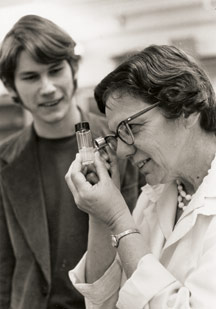
The windowless room, dank an dark, was not an obvious place for inspiration. I took notes, wondering if I would be able to glean anything meaningful from Professor Helen Stafford's (1922-2011) meandering lecture. I was skeptical. After all, this was the same teacher who, annoyed with our choice of vegetarianism, had told us that “plants have feelings, too”.
But what I learned that day, 33 years ago, would trigger a grand curiosity about the natural world and draw me into the greatest scientific puzzle of my career.
Please contact her if you have questions. I am leaving the text of the post below based on the notion that one should not completely delete anything from the record but rather post corrections and retractions. More detail will be coming from Pam soon. Kudos to Pam for trying to make sure the scientific record is accurate and for contacting me about this.

 |
Subscribe to:
Posts (Atom)
Most recent post
My Ode to Yolo Bypass
Gave my 1st ever talk about Yolo Bypass and my 1st ever talk about Nature Photography. Here it is ...

-
See Isolation and sequence-based characterization of a koala symbiont: Lonepinella koalarum Paper based on PhD thesis work of Katie Dahlha...
-
Just got this press release by email. I am sick of receiving dozens of unsolicited press releases, especially those in topics not related ...
-
 I have a new friend in Google Scholar Updates I have written about the Updates system before and if you want more information please see...